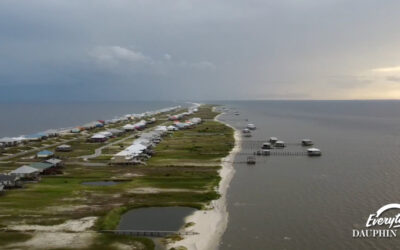
For nearly 90 years, ferries have carried travelers across the mouth of Mobile Bay, providing a scenic alternative to the long drive around the bay. Today’s Mobile Bay Ferry continues this maritime tradition, offering both a practical transportation link and a memorable journey that connects Dauphin Island to the eastern shore at Fort Morgan. This is the story of how a Depression-era venture evolved into an essential component of coastal Alabama’s transportation network.
Dauphin Island Ferry Early Years: Private Enterprise (1930s-1950s)
The idea of a ferry crossing at the mouth of Mobile Bay emerged in the late 1920s when automobile tourism began transforming the Gulf Coast. Prior to the ferry, reaching Dauphin Island from points east required a circuitous journey through Mobile and down the western shore of the bay – a trip that could take half a day from Gulf Shores.
In 1933, Captain John B. Cauthen launched the first commercial ferry service using a converted shrimp boat that could carry six automobiles. The crossing took approximately 90 minutes, depending on the weather and tides. Passengers paid $2 per vehicle (roughly $45 in today’s dollars), which many considered steep but worthwhile to save hours of driving. Cauthen’s ferry operated on demand rather than a fixed schedule, with travelers often waiting hours for enough vehicles to justify a crossing.
The service proved popular enough that by 1937, Cauthen had invested in a purpose-built ferry, the “Mobile Bay I,” which could accommodate 12 vehicles and 40 passengers. This vessel established the first regular schedule with three daily crossings during the summer months and twice daily service in winter. The route connected Fort Morgan Point to the eastern tip of Dauphin Island near Fort Gaines, the same route used today.
World War II brought unexpected changes to the ferry service. The U.S. military commandeered the operation in 1942 to support troops stationed at both Fort Morgan and Fort Gaines. The ferry ran continuously during daylight hours, carrying military vehicles, supplies, and personnel. This period demonstrated the strategic importance of the crossing and established patterns of operation that would influence post-war service.
The Dauphin Island Ferry Modern Era Begins (1950s-1980s)
After the war, private operators struggled to maintain profitable service. Vessels required expensive maintenance, insurance costs soared, and seasonal fluctuations in ridership made year-round operation challenging. By 1952, three different companies had attempted to run the ferry, each eventually failing financially despite steady summer traffic.
Recognizing the ferry’s importance to regional tourism and economic development, the Alabama State Docks Department (now the Alabama State Port Authority) assumed operation in 1954. This transition to public operation coincided with the construction of the original Dauphin Island Bridge, completed in 1955. Rather than eliminating the need for ferry service, the bridge actually increased demand by making Dauphin Island more accessible to tourists who then wanted to explore eastward to Fort Morgan and Gulf Shores.
The state invested in new vessels explicitly designed for the Mobile Bay crossing. The “Fort Morgan,” launched in 1960, could carry 38 vehicles and 300 passengers, dramatically increasing capacity. This steel-hulled vessel featured enclosed passenger lounges, restrooms, and a snack bar – amenities that transformed the crossing from mere transportation into a tourist attraction.
Throughout the 1960s and 1970s, the ferry service evolved to meet changing demands. The schedule frequency increases during peak summer months, with boats running every 90 minutes from 8:00 AM to 6:00 PM. The addition of the “Dauphin Island” in 1971, a sister ship to the Fort Morgan, allowed simultaneous departures from both terminals, reducing wait times and doubling capacity.
Hurricane Frederic in 1979 marked a turning point for the ferry service. The storm destroyed the Dauphin Island Bridge, leaving the ferry as the only vehicular connection to the island for over three years. During this period, the ferry operated 24 hours a day with emergency funding from the Federal Highway Administration. Crews worked rotating shifts, and additional vessels were brought in from other Alabama ports. This crisis period proved the ferry’s vital role in regional transportation infrastructure.
Dauphin Island Ferry Modernization and Expansion (1980s-2000s)
The 1980s brought significant modernization to the Mobile Bay Ferry fleet. The state commissioned two new vessels, the “Mobile” and the “Fort Gaines,” built at Moss Point Marine in Mississippi. These modern ferries featured improved vehicle decks, climate-controlled passenger areas, and advanced navigation equipment, allowing safer operation in fog and storms.
Each new ferry could accommodate 55 vehicles and 350 passengers, with special lanes for RVs and commercial trucks. The vessels incorporated lessons learned from decades of operation, including wider ramps for easier loading, higher freeboards to handle rough seas, and more powerful engines to maintain their schedule despite strong currents at the bay mouth.
The 1990s saw the ferry service embrace tourism marketing. The crossing was promoted as “The Gulf Coast’s Most Scenic Drive,” emphasizing the journey rather than just the destination. Passengers could spot dolphins, pelicans, and occasionally sea turtles during the 40-minute crossing. The ferry terminals have added covered waiting areas, restrooms, and information kiosks with details about local attractions.
Technology improvements in the 2000s included GPS navigation systems, automated weather monitoring, and computerized reservation systems. The ferry service launched its first website in 2001, allowing travelers to check schedules and weather-related closures. By 2005, annual ridership exceeded 100,000 vehicles, justifying continued state investment in the service.
Recent Dauphin Island Ferry Developments and Current Operations (2010s-Present)
Hurricane Katrina in 2005 and the Deepwater Horizon oil spill in 2010 presented new challenges. Both events temporarily reduced tourism, forcing schedule cutbacks and staff reductions. However, these crises also demonstrated the ferry’s importance for emergency evacuation and response, leading to enhanced coordination with emergency management agencies.
In 2014, the Alabama Department of Transportation completed a comprehensive study of the ferry service, exploring options including privatization, service expansion, and fleet replacement. The study concluded that the ferry provided approximately $15 million in annual economic benefit to the region, far exceeding its operating subsidy.
The state invested $7 million in 2016 to refurbish the “Fort Morgan” and “Mobile” vessels, extending their service life by an estimated 15 years. Improvements included new engines meeting EPA Tier 3 emissions standards, updated passenger amenities including WiFi, and enhanced vehicle deck surfacing for better traction.
In 2019, the ferry service introduced its most significant upgrade: the ability to accept credit cards and mobile payments at both terminals. This seemingly simple change eliminated a longtime frustration for tourists who often arrived without sufficient cash for the fare.
The COVID-19 pandemic in 2020 created unprecedented challenges. Service was temporarily suspended in April 2020, then resumed with reduced capacity and enhanced cleaning protocols. Surprisingly, once restrictions were lifted, the ferry experienced record ridership as travelers sought outdoor activities and scenic drives. The 2021 season saw the highest ridership since Hurricane Frederic, with some summer days requiring drivers to wait for multiple crossings.
Dauphin Island Ferry: Schedule and Service Updates
The Mobile Bay Ferry connects Dauphin Island and Fort Morgan year-round, weather and maintenance permitting. It closes on Thanksgiving Day, Christmas Day and New Year’s Day.
Departure times change seasonally. During standard time, boats leave Dauphin Island every 90 minutes from 8 a.m. to 5 p.m., and Fort Morgan from 8:45 a.m. to 5:45 p.m. All times are local Central time. Check the official ferry schedule and service-update links or call 251-861-3000 before traveling.
- Dauphin Island landing: 112 Bienville Blvd, Dauphin Island, AL 36528.
- Fort Morgan landing: 110 AL-180, Gulf Shores, AL 36542.
Dauphin Island Ferry Tickets and Fares
Boarding is first come, first served. Buy tickets in person at either landing; the operator does not sell tickets online or in advance. Fares include a per-person charge plus a separate vehicle charge. Children age 3 and under ride free. Keep your receipt for the operator’s same-day passenger return allowance; vehicle return charges still apply.
See the official ferry pricing page for current fares, vehicle categories and return-trip details.
Schedule and ticket information checked November 24, 2026. Confirm service with the operator before departure.
The Mobile Bay Ferry Experience Today
Modern ferry crossings offer more than just transportation. The 40-minute journey provides opportunities for:
- Wildlife Viewing: Dolphins frequently follow the ferries, especially during morning crossings. Brown pelicans, osprey, and various seabirds are familiar sights. During spring and fall migrations, passengers might spot exotic species passing through.
- Historic Forts: Both terminals offer access to Civil War-era fortifications. Fort Morgan, site of Admiral Farragut’s famous “Damn the torpedoes” order, is a short walk from the eastern terminal. Fort Gaines on Dauphin Island provides another glimpse into Civil War history.
- Scenic Photography: The ferry offers unparalleled views of Mobile Bay, the Gulf of Mexico, and both barrier islands. Sunset crossings are particularly popular with photographers.
- Educational Opportunities: Crew members often share information about the bay’s ecology, local history, and maritime operations. School groups receive special educational programs by advance arrangement.
Mobile Bay Economic and Environmental Impact
The Mobile Bay Ferry makes a significant contribution to regional economics beyond its direct operations. A 2022 economic impact study found:
- Direct employment: 32 full-time positions plus seasonal workers
- Indirect tourism support: Estimated $15-20 million annually
- Property value enhancement: Homes near ferry terminals show 5-7% premium
- Emergency services value: Critical for hurricane evacuation routes
Environmental considerations have become increasingly important. The modern vessels use low-sulfur diesel fuel and employ waste management systems, preventing any discharge into the bay. The ferry company participates in the Alabama Coastal Cleanup program and supports marine education initiatives.
Dauphin Island Ferry Future Plans and Challenges
Looking ahead, the Mobile Bay Ferry faces both opportunities and challenges:
Planned Improvements
- New vessel acquisition: The state has allocated funds for a new ferry by 2026, featuring hybrid diesel-electric propulsion
- Terminal upgrades: Both terminals will receive improvements, including covered waiting areas and enhanced boarding facilities
- Schedule expansion: Studies are underway for adding evening service during the summer months
- Technology integration: Real-time tracking apps and automated ticketing systems are in development
Ongoing Challenges
- Funding: The ferry requires annual subsidies of approximately $2 million
- Maintenance costs: Aging vessels require increasing maintenance
- Weather vulnerability: Climate change may increase service disruptions
- Competition: Improved highways reduce the time-saving advantage
Tips for Ferry Travelers
- Arrive Early: During peak season, arrive at least 30 minutes before departure. Holiday weekends may require a 60-90 minute early arrival.
- Check Weather: Call 251-861-3000 or check the official ferry schedule and service updates for the current operating status.
- Bring Entertainment: No WiFi on older vessels. Bring books, games, or downloaded content.
- Vehicle Tips: Turn off car alarms; they often trigger during crossing. Motorcycles should bring tie-down straps.
- Photography: Best shots from the upper deck. Protect cameras from salt spray.
- Seasickness: The crossing is usually calm, but motion-sensitive passengers should take precautions.
The Mobile Bay Ferry represents more than just 40 minutes saved on a Gulf Coast road trip. It embodies nearly a century of maritime heritage, connecting communities across Mobile Bay while providing a unique travel experience increasingly rare in our interstate highway world. Whether you’re a daily commuter, a tourist exploring coastal Alabama, or a history enthusiast tracing Civil War sites, the ferry offers a journey that transcends mere transportation.
As the service approaches its centennial, the Mobile Bay Ferry continues adapting to serve new generations while preserving the maritime traditions that make it special. The next time you drive aboard and hear the engines rumble to life, remember you’re participating in a continuing story that began with a converted shrimp boat in 1933 and now carries over 100,000 vehicles annually across one of America’s most historic waterways.