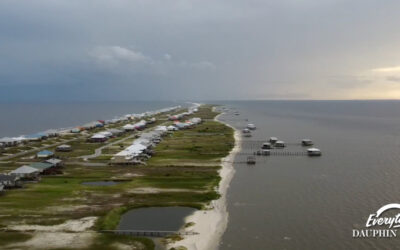
On the morning of August 5, 1864, Admiral David Glasgow Farragut lashed himself to the rigging of the USS Hartford and uttered what would become the U.S. Navy’s most famous battle cry: “Damn the torpedoes! Full speed ahead!” This dramatic moment during the Battle of Mobile Bay marked not just a tactical gamble, but the beginning of the end for the Confederacy’s last major port on the Gulf Coast. At the western entrance to Mobile Bay stood Fort Gaines on Dauphin Island, whose garrison would play a controversial yet crucial role in this decisive engagement.
The Strategic Importance of Mobile Bay
By the summer of 1864, Mobile Bay remained one of the Confederacy’s last lifelines to the outside world. While New Orleans had fallen in 1862 and most other Southern ports were under Union blockade or control, Mobile Bay continued to shelter blockade runners carrying vital supplies from Cuba and other neutral ports. The bay’s defense relied on a triangular system: Fort Morgan on Mobile Point to the east, Fort Gaines on Dauphin Island to the west, and Fort Powell guarding Grant’s Pass to the northwest.
Mobile Bay represented more than just a port – it was a symbol of Confederate resilience and a practical necessity for the South’s survival. Cotton still flowed out, while arms, ammunition, medicine, and other essential supplies flowed in. The Union’s Anaconda Plan, designed to strangle the Confederacy economically, could not be complete while Mobile Bay remained operational.
Admiral Farragut, already famous for his capture of New Orleans, had long advocated for an assault on Mobile Bay. By 1864, with the war entering its final phase and Grant pushing toward Richmond, the time had finally come to close this last major Confederate port on the Gulf.
Fort Gaines: Guardian of the Western Approach
Fort Gaines, completed in 1861, represented decades of American coastal defense philosophy. Named for Edmund Pendleton Gaines, a general who had served in the War of 1812, the fort was a pentagonal structure with five bastions, designed by the U.S. Army Corps of Engineers as part of the Third System of American coastal fortifications.
The fort’s walls, constructed of brick and sand, rose 22 feet above the surrounding landscape. Its design included:
- 26 gun emplacements in the main fort
- Additional water battery positions
- Bombproof shelters capable of protecting 300 men
- A central parade ground with hot-shot furnaces for heating cannonballs
- Underground magazines for powder storage
- A sophisticated cistern system for water collection
When Alabama seceded in January 1861, state forces quickly seized the incomplete fort. Confederate engineers spent three years strengthening its defenses, adding earthen reinforcements and positioning heavy guns to command the main ship channel. By August 1864, Fort Gaines mounted 26 guns, including 32-pounders, 10-inch Columbiads, and rifled pieces capable of reaching across the three-mile channel to Fort Morgan.
The Defenders of Fort Gaines
Colonel Charles D. Anderson commanded Fort Gaines with approximately 818 men, a mix of Alabama troops and artillerymen. Anderson, a Mexican War veteran, faced an impossible situation. His garrison included:
- The 21st Alabama Infantry Regiment
- Elements of the 1st Alabama Artillery
- Local militia and home guard units
- Many soldiers who were either very young or past their prime fighting age
Morale at Fort Gaines was problematic even before the battle. The fort’s isolation on Dauphin Island, combined with supply shortages and the increasing certainty of Union victory, created a sense of fatalism among the defenders. Letters home from soldiers stationed at the fort reveal concerns about inadequate provisions, insufficient ammunition for prolonged combat, and worry about their families on the mainland.
The Confederate Defense Plan
The Confederate strategy for defending Mobile Bay relied on interlocking fields of fire between the three forts and a carefully laid minefield (then called “torpedoes”) across the main channel. A line of submerged mines stretched from Fort Morgan toward Fort Gaines, leaving only a narrow channel under Fort Morgan’s guns for blockade runners.
The plan assumed that:
- Enemy ships attempting to run the channel would be destroyed by crossfire from Forts Morgan and Gaines
- The minefield would force ships close to Fort Morgan’s guns
- The small Confederate naval squadron, led by the ironclad CSS Tennessee, would engage any ships that penetrated the bay
- The forts could withstand a siege until relief arrived from Mobile
This strategy had worked for three years, keeping the Union blockading squadron at bay. However, it had never been tested by a determined assault with overwhelming force.
Farragut’s Fleet Assembles
Admiral Farragut spent months preparing for the assault on Mobile Bay. His fleet eventually consisted of:
- 14 wooden warships, including his flagship USS Hartford
- 4 ironclad monitors: USS Tecumseh, USS Manhattan, USS Winnebago, and USS Chickasaw
- Numerous support vessels
The Army contributed 5,500 troops under Major General Gordon Granger, tasked with landing on Dauphin Island and investing Fort Gaines from the landward side. This combined operation represented one of the war’s most complex amphibious assaults.
Farragut’s plan was audacious: run past the forts at dawn, accepting whatever damage they could inflict, destroy the Confederate naval squadron, and seal the bay from within. The Army would then reduce the forts at leisure, cut off from supplies and reinforcement.
The Land Campaign Begins
On August 3, 1864, two days before the naval battle, General Granger’s troops landed on the western tip of Dauphin Island. The Union forces quickly established a beachhead and began moving toward Fort Gaines. Confederate pickets withdrew after brief skirmishing, and by August 4, Union forces had invested the fort from the landward side.
Colonel Anderson faced an immediate crisis. His water supply, dependent on cisterns, could be interdicted. His guns, designed to fire seaward, could not effectively engage land forces approaching from the island’s interior. Most critically, he had no hope of reinforcement or relief.
Union forces emplaced siege guns and mortars, beginning a bombardment that would continue throughout the naval battle. The psychological effect on Fort Gaines’ garrison was immediate and severe. They could see Union preparations, hear the enemy digging siege trenches, and knew their isolation was complete.
August 5, 1864: The Naval Battle
At 5:30 AM on August 5, Farragut’s fleet began its run past the forts. The ships were lashed together in pairs, with larger vessels protecting smaller ones from fort fire. The four monitors led the way, their heavy armor designed to absorb punishment from the Confederate guns.
Fort Gaines opened fire as the Union fleet came within range, its guns adding to the crescendo from Fort Morgan. The smoke from hundreds of guns soon obscured the channel. Then disaster struck the Union fleet – the monitor USS Tecumseh, leading the column, struck a torpedo and sank within minutes, taking 93 men down with her.
This created the battle’s crucial moment. The Union fleet began to falter, bunching up under Fort Morgan’s guns. Ships started backing water to avoid the minefield. It was then that Farragut, lashed to the Hartford’s rigging to see above the smoke, issued his famous order. The Hartford led the fleet directly through the minefield. Whether by luck, Providence, or defective Confederate torpedoes, the ships passed through safely.
Fort Gaines continued firing throughout the morning, but once the Union fleet entered the bay, the fort’s strategic relevance diminished. The garrison could only watch as Farragut’s ships engaged and defeated the CSS Tennessee, capturing Admiral Franklin Buchanan and effectively ending Confederate naval power in the bay.
The Siege and Surrender
With the Union fleet now controlling the bay and Union Army forces tightening their siege lines, Fort Gaines’ position became untenable. On August 5-6, Union siege guns and naval vessels bombarded the fort continuously. The fort’s cisterns were damaged, creating a water crisis. Several guns were dismounted, and casualties mounted.
Colonel Anderson faced a terrible decision. His orders from General Dabney Maury in Mobile were to hold at all costs. But Anderson saw the situation differently. The naval battle was lost, relief was impossible, and continued resistance would only result in unnecessary casualties. The fort’s magazines, if hit by Union mortars, could destroy the entire garrison.
On August 7, Anderson sent a flag of truce to General Granger. This decision sparked immediate controversy. Fort Morgan’s commander, Brigadier General Richard Page, attempted to relieve Anderson of command by signal flag, but it was too late. Anderson negotiated terms that allowed his men to surrender with honors of war, though they would become prisoners.
At 9:30 AM on August 8, 1864, Fort Gaines surrendered. The Union flag was raised over the fort that had guarded Mobile Bay’s western approach for three and a half years. The garrison marched out, stacked their arms, and began their journey to Northern prison camps.
The Controversy and Consequences
Anderson’s surrender of Fort Gaines became one of the Civil War’s most controversial capitulations. Critics, including General Page at Fort Morgan (who would hold out until August 23), accused Anderson of cowardice and premature surrender. The Confederate Congress launched an investigation. Anderson defended his decision, arguing that:
- The naval battle’s outcome made the fort’s position hopeless
- His garrison lacked supplies for a prolonged siege
- The fort’s design made it vulnerable to land attack
- Further resistance would have resulted in pointless casualties
The military court eventually exonerated Anderson, but his reputation never recovered. He spent the remainder of his life defending his decision, maintaining that he saved hundreds of lives with no impact on the battle’s outcome.
Fort Gaines’ Legacy
The fall of Fort Gaines, followed by Fort Morgan two weeks later, sealed Mobile Bay and effectively ended Mobile’s role as a Confederate port. While the city itself wouldn’t fall until April 1865, the loss of the bay was a mortal blow to the Confederacy’s already failing economy.
The battle demonstrated several important military lessons:
- The vulnerability of fixed fortifications to combined operations
- The importance of naval supremacy in coastal warfare
- The psychological impact of isolation on defensive garrisons
- The changing nature of warfare, as ironclads and rifled guns made traditional fortifications obsolete
Preservation and Memory
Today, Fort Gaines stands as one of the best-preserved Civil War fortifications in the United States. Visitors can walk the same ramparts where Confederate gunners fired on Farragut’s fleet, explore the tunnels and magazines where powder and shot were stored, and stand in the central parade ground where Colonel Anderson made his fateful decision to surrender.
The fort tells multiple stories:
- The evolution of American coastal defense
- The complexity of Civil War military decisions
- The human cost of war on both sides
- The transformation of military technology
Original cannons still point toward the ship channel, though pleasure boats and oil rigs now dot the waters once filled with warships. The fort’s museum displays artifacts from both Union and Confederate forces, including projectiles fired during the battle, personal items from soldiers, and period weapons.
Understanding Fort Gaines’ Role
Fort Gaines’ role in the Battle of Mobile Bay was both crucial and tragic. Crucial because its guns helped create the deadly gauntlet that Farragut had to run, contributing to the Union’s losses and nearly stopping the attack when the Tecumseh sank. Tragic because once the fleet passed, the fort’s fate was sealed, leaving its commander to choose between honor and humanity.
The fort’s story reminds us that Civil War battles were not just grand strategic movements but human dramas played out by individuals facing impossible choices. Colonel Anderson’s decision to surrender Fort Gaines may have denied his garrison a heroic last stand, but it preserved lives that would have been lost to no purpose.
Visiting Fort Gaines Today
Modern visitors to Fort Gaines can experience one of the most authentic Civil War sites in America. Unlike many historical sites that require imagination to envision past events, Fort Gaines remains remarkably unchanged. The same brick walls that absorbed Union shots still stand. The gun emplacements that thundered during the battle stay in position. The tunnels and chambers where soldiers waited during bombardments are still accessible.
The fort offers:
- Self-guided tours with interpretive signage
- Original Civil War cannons and fortifications
- A museum with extensive artifact collections
- Living history programs and reenactments
- Educational programs for students
- Special events commemorating the battle
The view from Fort Gaines’ ramparts encompasses the entire lower Mobile Bay, allowing visitors to understand the strategic importance of this position. On clear days, Fort Morgan is visible across the channel, helping visitors appreciate the deadly crossfire that protected Mobile Bay for three years.
The Battle of Mobile Bay and Fort Gaines’ role in it marked a turning point in the Civil War’s final phase. While overshadowed by Sherman’s March to the Sea and Grant’s Virginia Campaign, the closure of Mobile Bay strangled one of the Confederacy’s last economic lifelines. Fort Gaines, though it surrendered after only three days of siege, played its part in one of the war’s most dramatic naval battles.
Today, as waves lap against the same shores where Union troops landed in 1864, Fort Gaines stands as a monument to a pivotal moment in American history. It reminds us that the Civil War’s outcome was determined not just in famous battles like Gettysburg or Antietam, but in countless engagements at places like Mobile Bay, where individual courage, difficult decisions, and technological change combined to shape the nation’s future.
For visitors to Dauphin Island, Fort Gaines offers more than just a historical site – it provides a tangible connection to one of the most transformative periods in American history, when the future of the nation was decided in part on this small barrier island at the mouth of Mobile Bay.